Putting a name to a feeling genuinely helps — and a record of those names, kept over weeks, shows you patterns your memory smooths over. But a mood log is also one of the most intimate datasets a person can produce, which makes where it lives as important as whether you keep it. Here's how to track mood usefully, lightly, and privately.
Why naming a feeling helps
Psychologists call it affect labelling, and it's more than journaling folklore. In a brain-imaging study, Lieberman and colleagues (2007) found that simply putting feelings into words dampened the amygdala's response to distressing images — naming the feeling took some of the heat out of it. The effect is modest and the setting was a lab, but it matches lived experience: "I'm anxious about Thursday" is more handleable than an unnamed weather system. A one-word check-in is a small act of regulation, not navel-gazing.
The record matters for a second reason: patterns. A rough Tuesday is noise. Six rough Tuesdays are information — about sleep, about a standing meeting, about what practice actually helps. You can't see the pattern you don't record.
Tracking lightly (so it survives)
- Once a day is plenty. After a practice session is a natural moment — you're already paused.
- Pick the near-enough word and move on. Mood tracking dies of over-precision. Close counts.
- Read weekly, not daily. The day's dot means little; the month's shape means a lot. Look for what Fridays do, what poor sleep does, what a session changes.
- Let it inform, not grade. A low week recorded honestly is the practice working, not failing.
The part most apps get wrong
Now the uncomfortable half. Mood data — feelings, timestamped, over months — is precisely the material researchers keep finding shared and monetised in this category. A mood log on someone else's server is an emotional profile you don't control. Before trusting any tracker, read its store privacy label and ask one question: does this leave the phone?
In Maitora
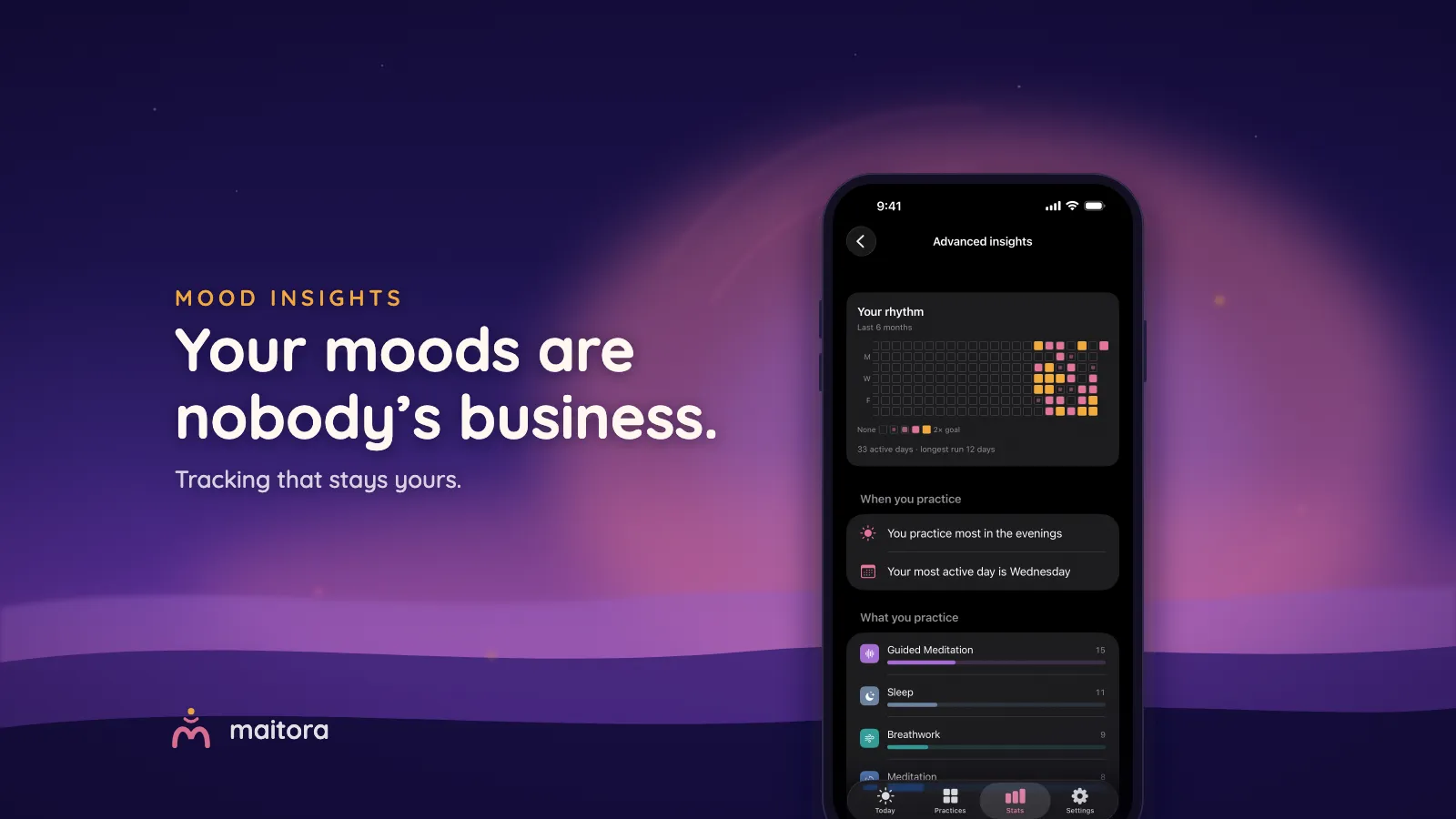
We make Maitora, so here is our answer to that question, checkably. Mood check-ins and the 30-day trend live in Mood Insights, on your device — part of the free app, with no account and no server to send them to. On iPhone, you can additionally opt in to writing your mood to Apple Health as a State of Mind entry (iOS 18 and later), where it stays under Apple's health protections on your own phone. On Android, your mood is never written anywhere outside the app at all. Either way, the most honest dataset you own stays yours.
Name today's weather, privately. Maitora is free to start on the App Store and Google Play.